Are you faced with the decision of whether to build a new pigsty or renovate an existing one? But are you still unsure about the pig feeders or the feeding system? If so, read our buying guide on pig feeders and drinkers. Of course, you can also visit our online request for advice Please fill in the form and we’ll be happy to discuss with you, with no obligation, which pig feeding system is best suited to your situation. The best choice is certainly not always the most expensive one. Benefit from our 50 years’ experience in piglet crates, piglet huts, piglet nests, underfloor heating and drinking troughs, feeding troughs for newborn piglets, piglets, fattening pigs and sows. We can answer virtually all your questions.
Pig feeders: pig troughs, dry feeders or porridge pots?
Which one will you choose, and why?
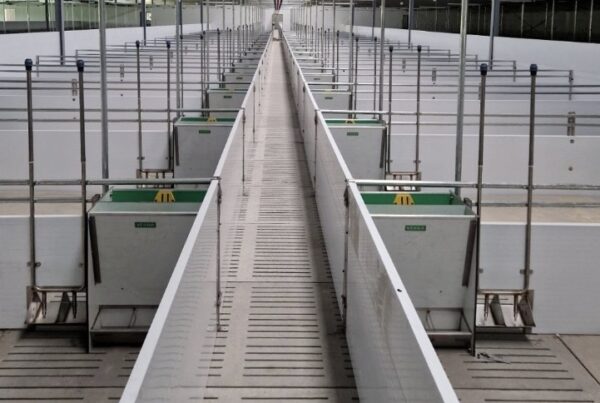
The feeding troughs The pig feed that we produce and supply ourselves has all been developed and refined with sequential feeding in mind. Whether it concerns dry feed troughs for pigs, dry feed troughs for piglets, feed troughs with integrated drinking troughs, porridge pots, tray boxes, Variomix slurry feeders (automatic feeders), farrowing pen feeders or pig troughs For group housing as a replacement for sow feeding stations; they are all designed for ad libitum feeding. The pigs can therefore eat their feed and drink in peace 24 hours a day. This ensures calm in the pens and prevents stress in the pigs, which significantly benefits their growth. Calm, cleanliness and regularity are important for pigs, and this is perfectly in line with Verba feeders.
Type of pig feed
The type of feed trough or drinking trough we recommend depends on the type of feed the pig farmer wishes to use. We divide feed types into five categories: pellets, crumbs, meal, meal mixed with up to 35% CCM and/or wheat and barley, and slurry feed. In addition, it is of course important to consider whether the pigs are farrowing piglets, piglets, fattening pigs, rearing gilts or sows. Not every automatic feeder is suitable for meal, and not every feed trough is suitable for pellets. There is a significant difference between them. We have a suitable feeding trough with matching drinkers for every pig at every stage of life and for every type of feed. Thanks to these many possible combinations, we can say that we have the world’s largest range of automatic feeders. We have the right solution for every situation.
Number of pigs
In addition, the size of the group of pigs is a factor. Each feeding trough on our website specifies the ideal number of pigs per trough. This number of pigs per feeding point may vary depending on the country, legislation or pig farmer, but after 50 years of experience, we know that these numbers of pigs per trough deliver the best results.
Feeding at the same time
If you are feeding at the same time – for example, when feeding pigs a slurry diet – we can also manufacture a stainless steel pig trough for you. We also manufacture the following in our own factory: feed troughs High-quality, with an indestructible stainless steel beaded edge at the front that is extremely stable and perfectly sealed, preventing any wet feed from seeping in. In short, there is virtually no stable situation in which we cannot provide you with a feeding system.
Automatic feed dispenser: don’t waste pig feed
Our pigs and piglets feeding troughs are, in principle, all automatic feeding systems. With a feeding machine, all feed troughs can be filled easily, and the pigs can simply help themselves to their feed throughout the day. Verba has always paid great attention to animal-friendly design and the welfare of the pigs in the feed troughs. The feeding troughs They are finished with extra care to ensure that the animals cannot injure themselves on any sharp edges, sustain any cuts, or have their ear tags get caught. This is a vital foundation for preventing infections and reducing the need for medication or antibiotics where possible.
Feed wastage
In addition, we pay a great deal of attention to preventing feed wastage. Virtually every feeder has an ingenious anti-spill rim at the front or anti-spill bars on the side to prevent feed wastage. This ensures that no feed falls into the manure pit and that you achieve the best feed conversion. This not only saves you on feed costs but also helps reduce your carbon footprint.
All our feeding troughs are easy to adjust and very precise. The animals cannot possibly adjust the feeders themselves, so if the feeding troughs Once set up, the pig does the work itself and you rarely need to readjust a feeder. The adjustments are very simple and quick to make, which saves on labour costs. Our advice is definitely not to set the feeders too generously. After all, the pigs can eat all day long and do so at their leisure. It is beneficial for them to have to work a little for their food without realising it. Because the pig, in this way, unconsciously pushes a flap with its forehead or because a portion of feed is placed in front of its nose, we simulate with our feeding troughs This mimics the pig’s natural foraging behaviour. This greatly improves feed intake and feed conversion. We always recommend having a drinking nipple with a trough for fresh water either in the feeding trough itself or nearby. If a pig can also drink fresh water whilst eating, feed intake improves because they eat with greater appetite. Furthermore, this ensures better absorption of the pig feed, as the pig can remain at the feeding area rather than having to walk away to drink whilst eating.
Colour and natural light: benefits
Finally, the colour of the feeding trough is important. Our feeding troughs are all white or stainless steel on the inside. This allows plenty of light in, which has many advantages over dark or black feeding troughs. Firstly, the animals can see the food more clearly. Furthermore, a pig does not like to put its head into a dark space – after all, a pig is a flight animal. A light-coloured feed trough encourages them to eat much more readily. Moreover, our feeding troughs as open as possible, because seeing food makes you want to eat.
The same applies to drinking troughs: seeing others drink encourages drinking. That is why the dual-drinking troughs, which can be built into the wall, are ideal alongside dry feed troughs for piglets and why fattening pigs are so popular. The pigs can see each other drinking. For these reasons, pigs prefer to eat from a light-coloured feed trough rather than a dark one.
Finally, a light-coloured feed trough greatly improves hygiene in the pigsty. If a feed trough, trough or flap is black or dark in colour, it is harder for a pig farmer or their staff to see when the sty is dirty or if feed is caking on any surfaces. This also offers many advantages when hosing down the barn, as it is easier to see what is clean and what is dirty. This saves a great deal of labour time and therefore reduces costs.
Second-hand pig feeders? Why we don’t recommend them
For 50 years, we have been manufacturing, developing and supplying professional feeding troughs for piglets, pigs and sows, offering great ease of use. The development of feeding troughs never stands still. After all, situations are always changing, as are the demands placed on them, and farmers often come up with very good ideas based on their practical experience.
If a question or comment is raised frequently, or if a valid complaint is made on a regular basis, we adapt our product accordingly straight away and adjust our range. The feeding troughs as they are now, are different from the feeding troughs several years old. This isn’t always obvious, but can usually be seen in details such as spill marks, adjustments or the thickness of the material used.
When purchasing second-hand feeding troughs, bear in mind that they should already comply with future legislation and regulations, so that they will last for a number of years. When reusing equipment, also ask people who have worked with it how they found it. After all, opting for cheap materials should not be at the expense of work efficiency and job satisfaction.
In addition, please ensure that when purchasing second-hand materials, these have been thoroughly cleaned so that viruses or diseases cannot be inadvertently introduced, such as the The NVWA also advises in this article.
Cheap can end up costing you more in the long run – try to avoid that.
Daily investment in pig feed
A huge amount of pig feed passes through a feeding trough every year. Feed is by far the biggest expense for a pig farmer. By keeping these costs under control on a daily basis with the best pig feed trough and by choosing a feed trough that will last a very long time, the feed trough pays for itself in a very short space of time. No feed wastage, optimal feed conversion and no feed ending up in the slurry pit ensure the lowest fixed costs incurred daily in the pigsty and contribute to a lower carbon footprint. We would go so far as to say that the right feeding trough in the barn is the best and most important investment you can make in your pig pens. This is not an area where you should look to cut costs. Are you considering second-hand porridge pots If you’re looking to buy dry food bowls, whether new or second-hand, think carefully about your choice. For example, buy a new Verba trial bowl and compare it with a second-hand bowl or one from another brand. You’ll soon be convinced.
Pig housing
As well as pigs feeding troughs As well as producing drinking troughs, we also supply professional piglet pens, piglet nests and underfloor heating systems for piglet nests. Here too, we select only the best European materials. For piglet shelters, for example, we use impact-resistant, UV-resistant plexiglass sheeting, which does not yellow and is therefore less prone to tearing. Combined with a stainless steel frame, this ensures the strongest construction available. We also manufacture piglet shelters from 10mm HDPE sheeting. For underfloor heating systems for piglets, we use indestructible plastic panels with excellent grip that are highly wear-resistant. These heating panels are often used when refurbishing farrowing pens because the existing heating panels are leaking or because the top layer is worn out. The hot-water pipe incorporated into our heating panels is 75 per cent embedded within the top layer and makes no contact with the bottom panel. Thanks to this stationary air insulation, the panel insulates itself, making insulation on the underside of the panel completely unnecessary. The underfloor heating systems and couplings we use are completely oxygen-tight and diffusion-tight, preventing any incoming air from entering the beds that would hinder heating. We stock the underfloor heating systems, piglet caps and piglet nests in standard sizes, but we can also manufacture non-standard sizes or shapes at our own factory in the Netherlands.
Grade A, made in Western Europe
For our feed troughs, underfloor heating systems and piglet nests, we use high-quality pigsty components, which are manufactured primarily in Western Europe using our own moulds and are of the very best quality. Verba has an online shop where many of these items, such as drinking nipples and star-shaped knobs, for pig housing are sold as spare parts or replacements for existing components. Through this online shop, we’d like to let you benefit from the competitive prices we offer, as we incorporate large quantities of these top-quality pigsty accessories into our pigsty products every year. You can easily order these parts and they will be delivered as quickly as possible.